A full-service recruiting firm manages the entire hiring process for organizations. This includes workforce planning, job postings, sourcing, screening, and interviewing. It also covers selecting and placing candidates.
It offers structured recruitment services with recruiters linking businesses and candidates. The approach is designed to optimize hiring processes and improve applicant matching. It also reduces internal workload for firms. They aim to make hiring more efficient, consistent, and scalable.
Key Takeaways
- Full-service recruiting agencies take care of the entire employment process.
- They provide structured recruitment services to employers.
- A recruiter supervises sourcing candidates and employer liaison.
- They make hiring more efficient and standardized.
- They enable a variety of employment models across a range of businesses.
Full-Service Recruiting Companies Explained
A full-service recruiting organization offers complete hiring help throughout the recruitment process. This includes identifying positions, developing job descriptions, and finding candidates. It also covers reviewing applications, arranging interviews, and handling job offers. The goal is to centralize hiring into one recruitment system.
A recruiting company is an external hiring partner for employers. A recruiter serves as the main coordinator between the company and candidates. They ensure all hiring stages follow established parameters. Full-service recruiting combines workforce planning with hands-on recruitment.
Core Recruitment Services in Hiring Operations
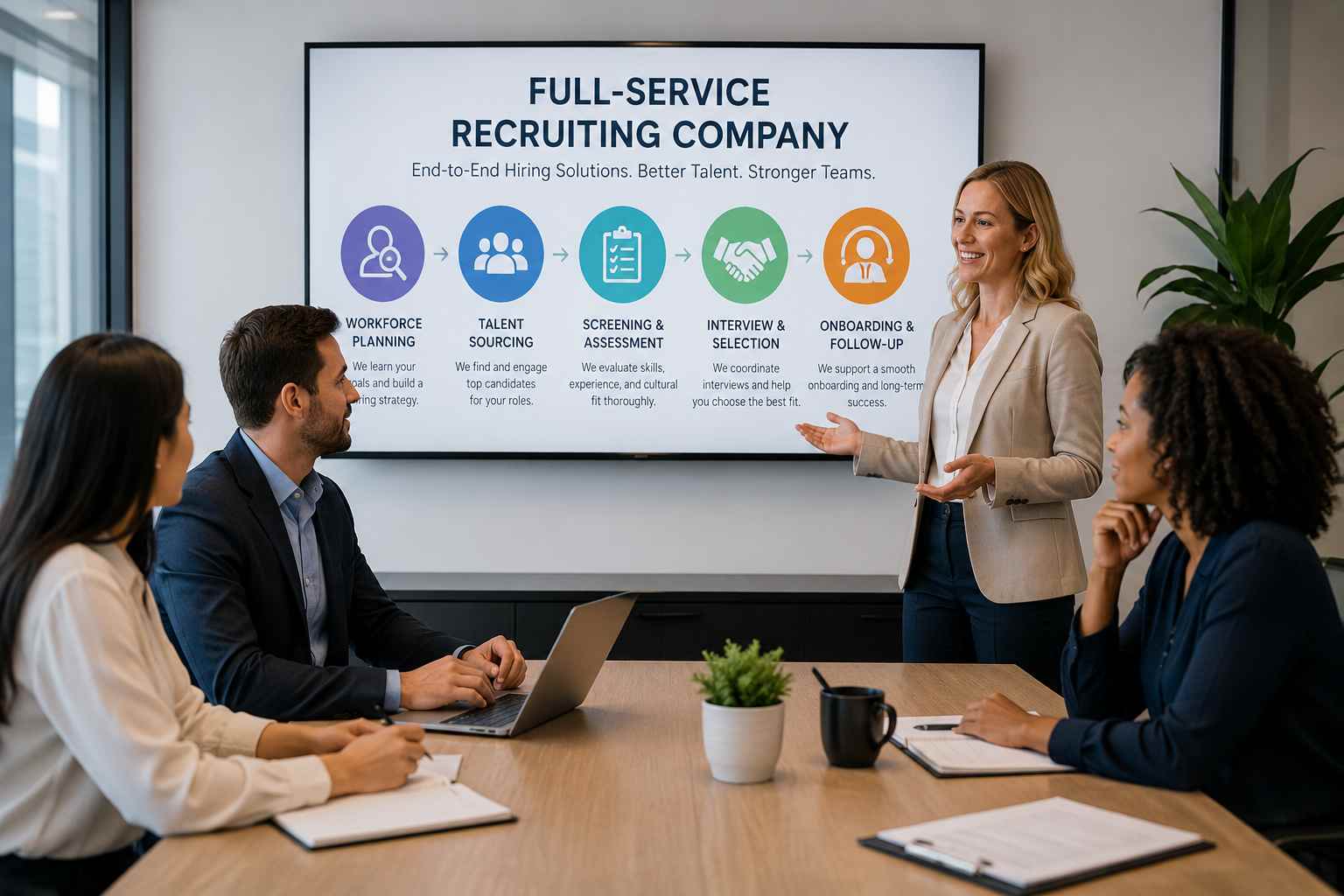
A full-service recruitment model follows a structured set of steps. These steps are designed to improve hiring accuracy and efficiency. They are widely used but adjusted by role, level, and specialization.
A full-service recruitment process typically includes the following key steps:
- Job requirements analysis and workforce planning
- Sourcing candidates through databases and job portals
- Resume screening and skills matching
- Interview scheduling and coordination
- Job offer management and placement support
Recruitment firms leverage digital tools such as Applicant Tracking Systems (ATS). These tools help organize candidate pipelines and streamline hiring workflows. Structured recruitment frameworks improve consistency in candidate evaluation and reduce time-to-fill.
Labor market data highlights recruiters’ role in improving workforce efficiency. NW Recruiting Partners uses this model to match hiring needs with qualified candidates.
Recruiters’ Role in the Hiring Process
Recruiters manage the day-to-day activities of the hiring process within a recruitment organization. This involves sourcing candidates, screening applications, and performing initial assessments. It also involves coordinating interviews with hiring managers.
Recruiters ensure that candidates’ skills and qualifications align with job requirements. They facilitate clear and consistent communication throughout the hiring process. This helps reduce delays and keeps employers and applicants informed. In structured recruitment, the recruiter is the main contact for hiring updates.
Different Types of Full-Service Recruiting Models
Full-service recruiting models depend on hiring needs and role complexity. Retained recruiting fills specialist or executive roles exclusively.
- Contingent recruitment is often used for high-volume hiring. Payment is made only once a candidate is successfully placed.
- Hybrid models integrate features of both, giving flexibility depending on the role requirements.
- Structured recruiting enhances hiring by standardizing evaluations and minimizing bias.
Each model uses recruitment services in different ways. However, all rely on recruiters to oversee sourcing, screening, and coordination.
Integrating Technology and Processes in Recruitment
Modern recruitment firms use technology to improve hiring precision. ATS, AI screening tools, and online interview platforms help recruiters manage candidates. They make it easier to handle high volumes of applicants. These techniques help in speedier decision-making, while keeping uniformity in the assessment.
Recruiting organizations track KPIs like time-to-fill, cost-per-hire, and candidate quality. This enables ongoing improvements to recruitment services. It also improves alignment with employer needs.
Frequently Asked Questions
Q1: What is a full-service recruiting agency?
A full-service recruiting business handles all aspects of the hiring process. This includes sourcing, screening, interviewing, and placement through organized recruitment services.
Q2: What is the difference between a recruiting company and internal HR?
A recruiting company provides external recruitment services across multiple industries. Internal HR teams handle hiring within a single organization. Recruiting companies have access to a wider pool of candidates. They also have specialized recruiter expertise.
Q3. What does the recruiter do in recruitment services?
Recruiters find prospects, review applications, and schedule interviews. They also serve as the communication link between companies and applicants.
Q4. Why do organizations utilize recruitment services?
Companies use recruitment services to speed up hiring and improve candidate selection. They also access a broader talent pool without overburdening internal HR teams.
Q5: What industries do full-service recruiting firms serve?
Full-service recruiting firms are used in healthcare, finance, technology, manufacturing, and administration. These industries require standardized hiring processes.
Q6: How does technology help recruitment companies?
Technology helps recruiting organizations automate prospect tracking. It also improves screening accuracy. It further speeds up communication between recruiters, employers, and candidates.