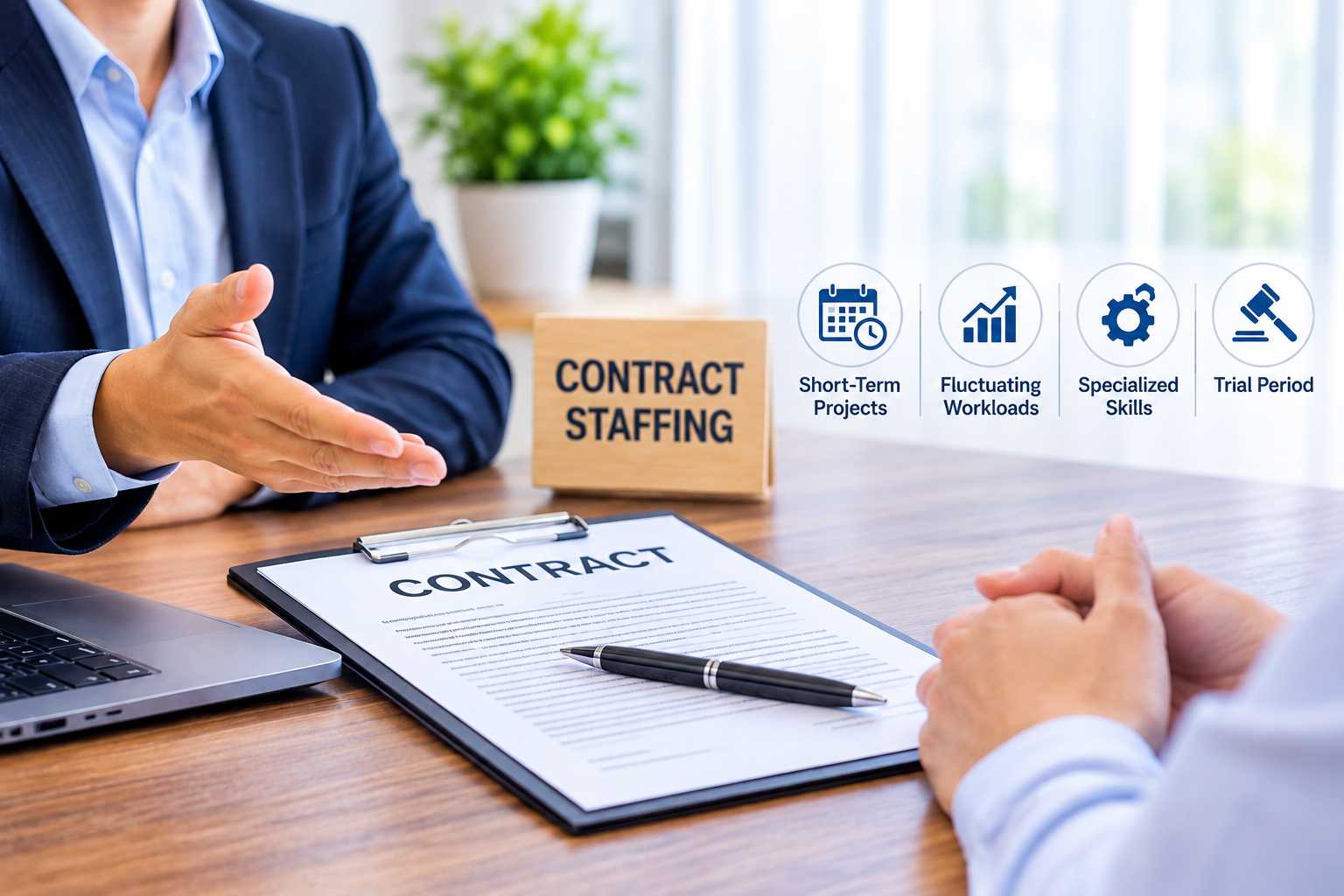
When businesses need temporary help, they hire people through contract-to-hire staffing. They also use it to check candidates before offering them a permanent job. This model works well when long-term workforce needs are uncertain.
Contract to hire jobs let employers assess a worker’s skills. They can use this data to decide whether to hire them permanently.
Main Points to Consider
- Contract-to-hire lets employers check job performance and cultural compatibility. They can see how well the candidate does before hiring them full-time.
- During unpredictable business cycles, companies can quickly change their staffing levels. They can also keep their cash flow steady.
- Staffing firms guarantee a shorter time to hire. Companies can fill talent gaps faster due to the agency’s streamlined onboarding process.
- The contract-to-hire model brings in candidates with a lot of skills. These prospects want short-term flexibility or want to check out possible employers.
- Testing compatibility up front makes it less likely that you’ll hire the wrong person. This saves the company money on costs like firing, hiring new people, and training them.
When Contract to Hire Makes the Most Sense for Employers
Contract-to-hire staffing helps companies balance short-term needs for workers with long-term hiring choices. It gives employers a chance to test applicants in a real work setting. This plan works well for employers when:
- There are a lot of risks that come with hiring. A permanent hire takes time, money, and effort to get up to speed. Employers can see how well a candidate does before making a longer-term commitment when they use a contract to hire.
- There are changes in business demand. Companies that have seasonal peaks or short-term sales boosts need to hire more people. They can hire through contract to hire agencies without adding to their permanent staff.
- The company doesn’t know what the long-term needs of a role are. When a company adds a new job, they need time to figure out what the duties, tasks, and skills needed are. A contract period helps make these needs clear.
- A group needs help right away. Contract to hire agreements help fill open positions and give managers a chance to check prospects. They can see if the candidate is right for a full-time job by testing them.
- It’s important to see how well the team works together. Employers watch how a candidate talks to others, works with others, and reacts to feedback. Before making a permanent offer, they want to see how well the candidate fits in.
How Contract-to-Hire Staffing Works
To find good candidates, companies work with a staffing agency like NW Recruiting Partners. They can opt for a contract to hire arrangement. During this period, the employer checks how well the candidate does and whether they’re right for the job.
The staffing agency can hire the worker during the contract period. In some cases, the company hires the candidate for a set amount of time. Payroll duties, benefits, and legal obligations are affected by the structure of the job.
When the agreed-upon time is up, the company can offer full-time work. This happens if both parties agree. If the match doesn’t work out, the deal ends as planned.
There should be clear criteria for evaluation for every company. Some of these factors are attendance, output, and technical skill. It also includes communication, working as a team, and meeting agreed-on performance goals.
Frequently Asked Questions
What is contract to hire staffing?
When you hire someone through a contract-to-hire model, they only work for a certain amount of time. After the contract is over, the company decides if they want to hire the person permanently.
How long does a contract-to-hire period last?
Three to six months is how long a contract-to-hire lasts. This period gives employers enough time to test job performance. They also check if the candidate fits the company’s culture. It also gives applicants enough time to learn about the work culture.
What happens if a contract worker is not a good fit?
If a worker doesn’t meet performance standards, the company can let the contract to expire. They don’t have to extend a full-time offer. This avoids the formal termination processes. It also prevents potential severance liabilities connected with direct hiring.
Which positions are best suited to contract-to-hire staffing?
Positions in IT, customer service, administration, and operations are suitable. Project-based work is also ideal for contract to hire. The arrangement is useful when employers need immediate support. It’s also good when management wants to test practical skills before making a permanent hiring decision.